Marken: Simplifying dangerous goods compliance for a world-class healthcare logistics provider
How Marken, a UPS company, partnered with DGXprt and Managed Compliance to take control of dangerous goods obligations at its Horsley Park facility.
"DGXprt has given our team the guidance and structure to own dangerous goods compliance with real confidence. What previously required significant manual effort and outside expertise is now something we manage continuously, in-house."
Marken, a UPS company, is a global leader in clinical and advanced therapy logistics, supporting pharmaceutical, biotechnology and life sciences organisations around the world. With a reputation built on quality, reliability and precision, Marken manages complex supply chains where compliance, product integrity and on-time delivery are critical to patient outcomes and clinical trials.
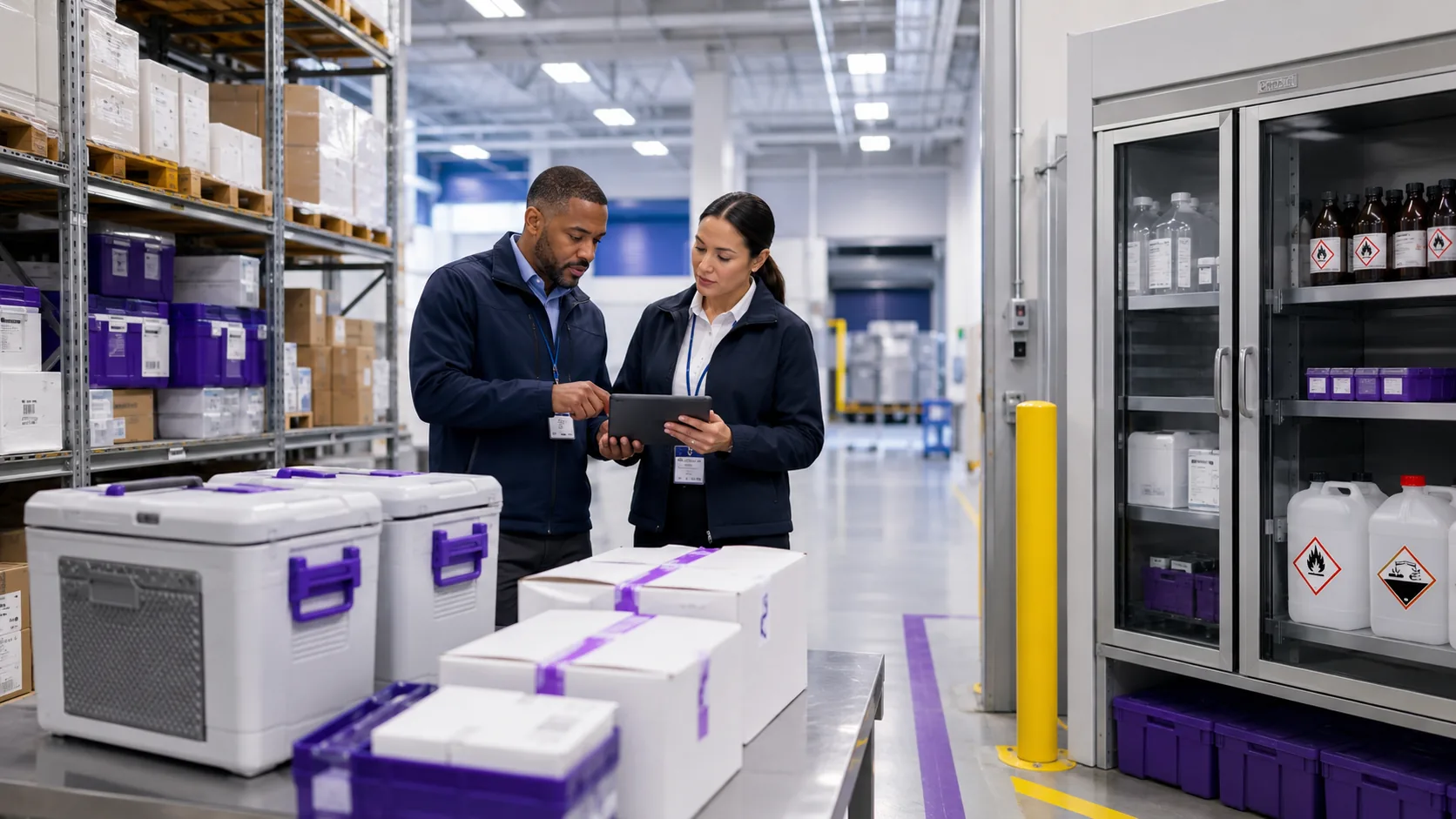
At its Horsley Park facility in New South Wales, Marken stores and handles a small quantity of dangerous goods, including flammable liquids and corrosive substances, as part of its overall healthcare logistics operations.
For Marken, compliance is not a standalone activity. It is embedded in everything they do. Their customers operate in highly regulated industries where quality, safety and accountability are non-negotiable. As a result, Marken is expected to maintain rigorous operational standards while continuing to meet demanding service levels, transit times and customer expectations.
Dangerous goods compliance adds another layer of complexity to this environment. While essential, it is not Marken's core focus. Their priority is delivering critical healthcare and life sciences logistics services safely, accurately and efficiently.
The challenge was ensuring dangerous goods compliance remained current, accurate and accessible without creating unnecessary administrative burden or requiring specialist dangerous goods expertise throughout the business.
Marken implemented DGXprt and its Managed Compliance service to provide a clear, reliable framework for managing dangerous goods obligations.
Establish baseline
DGXprt established a compliance baseline for the Horsley Park operation — dangerous goods inventories, manifest requirements, regulatory obligations and threshold assessments.
Continuous monitoring
DGXprt continuously manages and monitors these requirements, providing Marken with a real-time view of their dangerous goods compliance position.
Reduced manual effort
Reliance on manual processes and external advice is reduced — letting operational teams stay focused on healthcare logistics.
Compliance confidence
Marken now has a clear understanding of the dangerous goods present on site, the regulatory obligations that apply, and the controls required to remain compliant. Compliance information is accessible when needed and no longer dependent on specialist knowledge.
Automated registers and manifests
Dangerous goods registers and manifests are maintained within DGXprt and updated as inventory changes, reducing manual administration and ensuring documentation remains current.
Faster responses to customers and stakeholders
When customers, auditors or regulators request information about dangerous goods management, the team can access accurate information quickly and confidently.
Reduced operational burden
DGXprt removes much of the complexity associated with dangerous goods compliance, allowing operational teams to focus on their core responsibility: delivering exceptional logistics services to healthcare and life sciences customers.
Access to expert support
For complex regulatory questions, Marken has direct access to qualified dangerous goods specialists through the Managed Compliance service, providing expert guidance when required without maintaining dedicated internal resources.
Focused on healthcare logistics
With DGXprt managing compliance in the background, Marken's teams stay focused on what they do best — delivering critical clinical and life sciences supply chain services.
DGXprt has become an important part of Marken's broader compliance and quality framework.
By automating dangerous goods compliance activities and making obligations easier to understand and manage, DGXprt allows Marken to focus on what they do best: delivering critical healthcare and life sciences supply chain services with the confidence that their dangerous goods compliance requirements are under control.
"Before DGXprt, we were spending hours weekly on our register and still not feeling certain we had the full picture. Now we can see exactly where we sit, what's required and what's been done. It's taken something that felt complicated and made it manageable."