A Queensland business has received a $3,600 on-the-spot fine for a hazardous chemical register breach, alongside an improvement notice requiring corrective action within three weeks.
Following the inspection, the business identified two underlying issues:
- no hazardous chemical register in place
- missing or outdated safety data sheets (SDS)
This enforcement action reflects the priority given to basic hazardous chemicals documentation under Queensland WHS law. Importantly, it also signals a shift in how compliance is being enforced, not only through improvement notices, but also through immediate financial penalties.
Key point: this can apply to more workplaces than you think
In Queensland, the hazardous chemical register requirements can potentially apply to any business that uses, handles or stores hazardous chemicals at the workplace, including where quantities are small.
In practical terms, the effect of the regulation is that a business cannot lawfully "not know" which products on site are hazardous, and the quantities they store, handle or use. If hazardous chemicals are present, the expectation is that the workplace has a current register and the associated current SDS, and that both are readily accessible.
According to WorkSafe Queensland, there are more than 240 offence categories for which inspectors can issue infringement notices under work health and safety and electrical safety legislation.
Hazardous chemical register breaches fall within priority enforcement areas, meaning inspectors can issue on-the-spot fines where a register is not prepared, maintained, or readily accessible.
Industry perspective
"The use of on-the-spot fines by Workplace Health and Safety QLD for hazardous chemical register non-compliance provides a clear message to site owners and operators. The ongoing maintenance of current hazardous chemical registers and SDS' is both a requirement and an expectation. This applies to any workplaces which store or handle hazardous chemicals, irrespective of the quantity held."
Examples of workplaces that can be caught by these requirements
These requirements apply to far more workplaces than many businesses realise, including operations that do not consider themselves "industrial", for example:
- hardware and paint retailers
- automotive workshops, panel beaters and spray painters
- commercial cleaning businesses
- hospitality venues with back-of-house chemicals
- small warehouse operations
If you store or use any of the following, assume the register requirement applies:
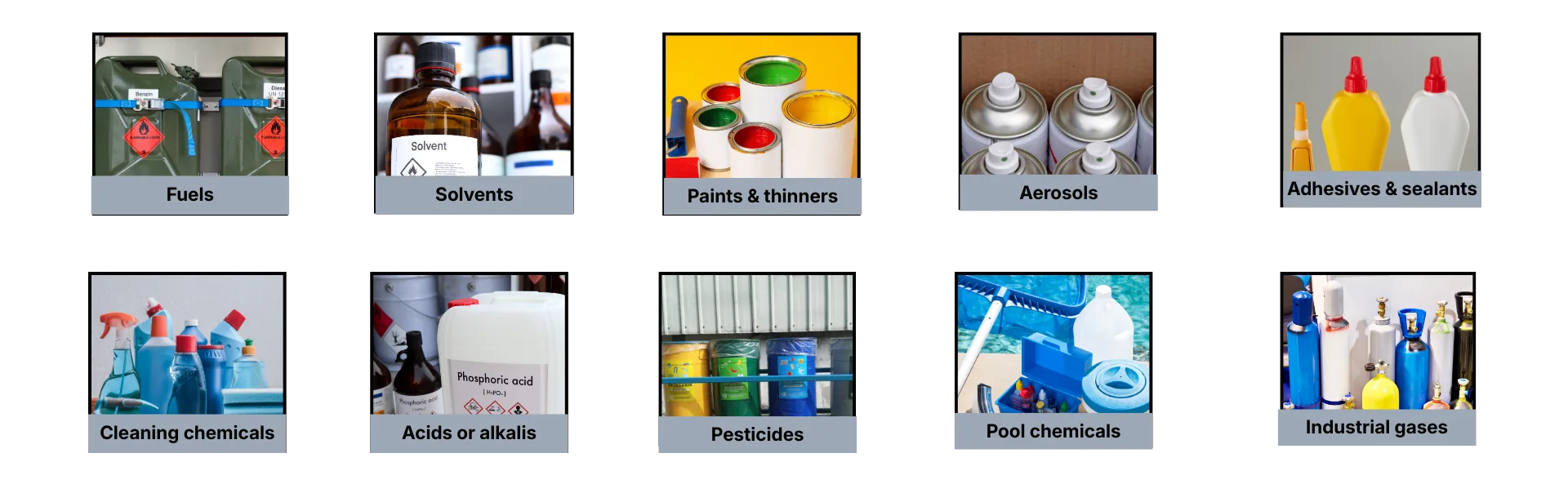
A practical compliance checklist for Queensland workplaces
- 1Confirm your hazardous chemical list reflects what is actually used, handled or stored on site today.
- 2Confirm every listed product has a current SDS attached, and it matches the product and supplier in use.
- 3Confirm workers can readily access the register in the work area, including after hours.
- 4Assign ownership and define simple update triggers to keep it current over time.
- 5Keep evidence of currency and access.
Use of infringement notices for hazardous chemical register non-compliance
The WorkSafe Queensland website notes that infringement notices (on-the-spot fines) can be used instead of taking the alleged offence to court.
This does not remove the requirement to comply. Inspectors may also issue improvement notices requiring corrective action.
A hazardous chemical register is also straightforward to verify during an inspection. It is either prepared, current, and accessible, or it is not.
Legal requirements under WHS Regulation 2011 (Qld), section 346
Section 346 sets out three practical requirements for PCBUs:
A register of hazardous chemicals used, handled or stored at the workplace must be prepared and kept at the workplace, and it must be maintained so it remains up to date.
The register must include a list of hazardous chemicals and the current SDS for each hazardous chemical listed.
The register must be readily accessible to workers involved in using, handling or storing hazardous chemicals, and to anyone else who is likely to be affected by a hazardous chemical at the workplace.
WorkSafe Queensland's hazardous chemicals guidance
WorkSafe Queensland describes the register as a list of product names of all hazardous chemicals used, handled or stored at the workplace, accompanied by the current SDS for each, and notes it must be updated as new hazardous chemicals are introduced.
Hazardous chemical register compliance in practice
A compliant approach includes:
- one source of truth for your hazardous chemicals list, using product names as used on site
- current SDS that match the exact product and supplier in use
- SDS included in the register that are current and compliant with WHS requirements, not just "on file"
- simple access in the work area, including after hours, so it is readily accessible to those who need it
- a maintenance process, including clear ownership and practical triggers for updates (new product introduced, supplier change, SDS update)
Common hazardous chemical register compliance failures
Even when a workplace believes it has a register, these gaps are common:
- SDS exist, but they are out of date, incomplete, or cannot be matched to the products in use
- the register exists, but it is not readily accessible to workers in the areas where chemicals are used or stored
- the list is not maintained, new hazardous chemicals arrive and are used before the register is updated
- reliance on supplier portals or email trails, which can create gaps, inconsistencies, and limited auditability
How DGXprt supports hazardous chemical register compliance in practice
DGXprt supports the practical outcomes behind section 346 by making it easier to generate and maintain a centralised hazardous chemical register with current SDS, and keep it operationally usable across a site or multi-site environment:
Centralised Register & SDS Library
One source of truth for your hazardous chemical register and SDS documentation across all sites.
AI-Assisted Extraction
Upload SDS and spreadsheets (including dangerous goods quantities), with AI-assisted extraction and built-in checks to reduce manual admin and improve data consistency.
SDS Quality Controls
Help ensure SDS held in the register are current and compliant, rather than incomplete, mismatched, or out of date.
SDS Q&A
Allow staff to interrogate SDS content and get direct answers to practical questions about chemicals on site.
Disclaimer: This article is general information only and is not legal advice. If you have received an infringement notice or improvement notice, respond within the stated timeframe and keep clear evidence of corrective actions.
See DGXprt in Action
Watch our product demo to see how DGXprt can help your business maintain hazardous chemical register compliance.
To learn more about how we are enabling smart dangerous goods compliance, contact us today.
Frequently Asked Questions
Frequently asked questions
Common questions about dangerous goods compliance software.