Dangerous Goods Matters — Episode 2
Reflections on Episode 2 of Dangerous Goods Matters, with Peter Hunt.
There are people who know dangerous goods regulations. And then there are people who helped write them.
Peter Hunt sits firmly in the second category.
A chemical engineer by training, a founding supporter of the Australasian Institute of Dangerous Goods Consultants (AIDGC), and a career spanning more than five decades, Peter has done things that most dangerous goods professionals only read about. He has investigated major fires and explosions. He has given expert evidence. He has facilitated HAZOPs on bridges. He once conducted a safety study on a helium-filled dragon at a parade running beneath overhead power lines.
In Episode 2 of Dangerous Goods Matters, hosted by David Irvine, Peter reflects on a career that began at ICI in the early 1960s and traces the arc of an entire industry alongside it.
It is a remarkable conversation. And it raises some questions that every business handling dangerous goods or hazardous chemicals should sit with.
The gap between compliance and safety
One of the clearest threads running through this episode is the difference between ticking a box and genuinely managing risk.
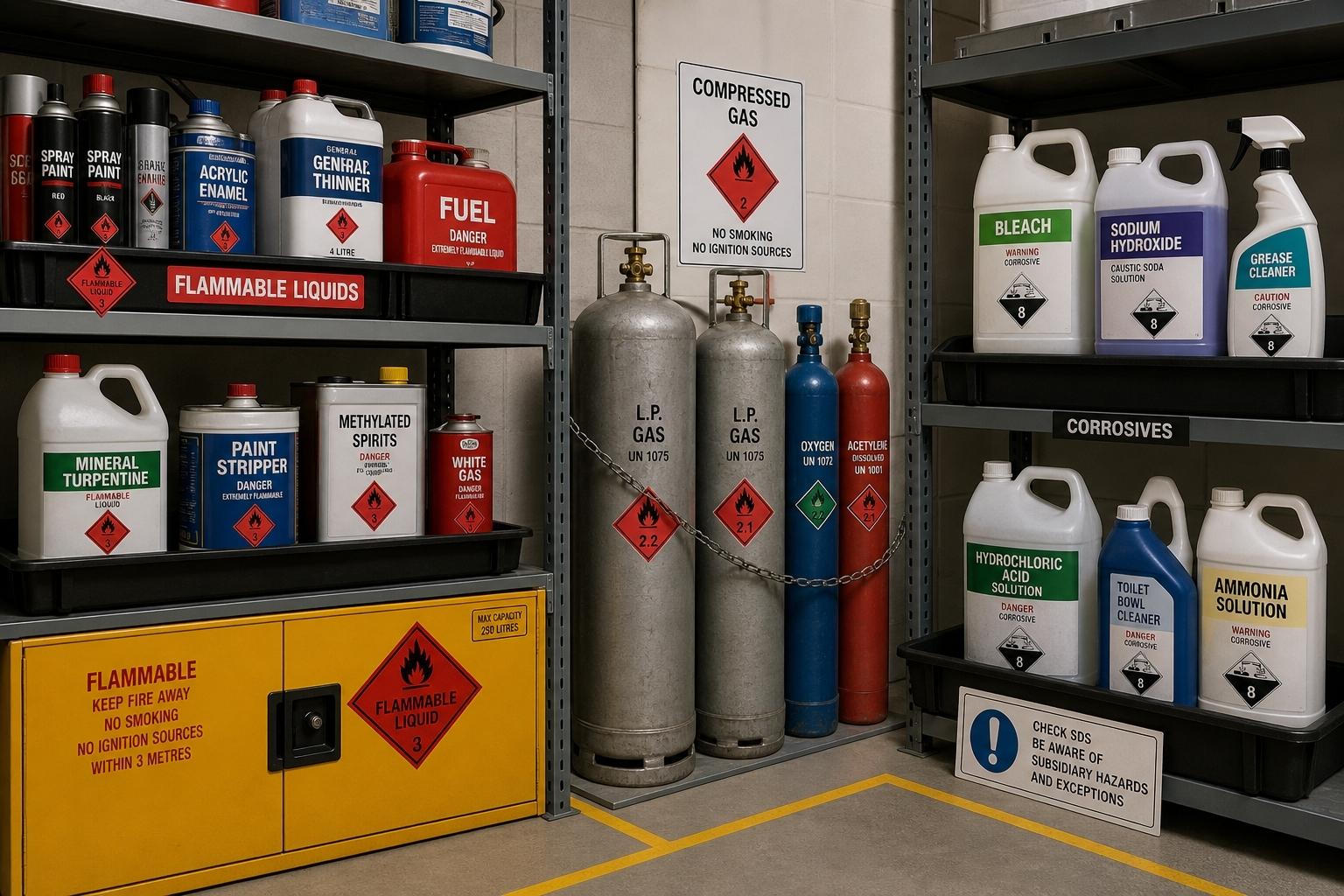
Peter is careful and precise about when compliance checks are sufficient, and when they are not. A hazardous substances register? Yes, you can check that off. The storage and handling of flammable liquids in a complex facility? No standard alone will get you there. AS1940 itself lists four categories of liquids it does not adequately cover.
The legislation in every state requires businesses to eliminate or minimise risks so far as is reasonably practicable. That phrase contains a methodology. Hazard identification. Risk assessment. Application of the hierarchy of controls. In that order. Every time.
“If you don't identify the hazard, you're not going to assess the risk, you're not going to control the risk.”
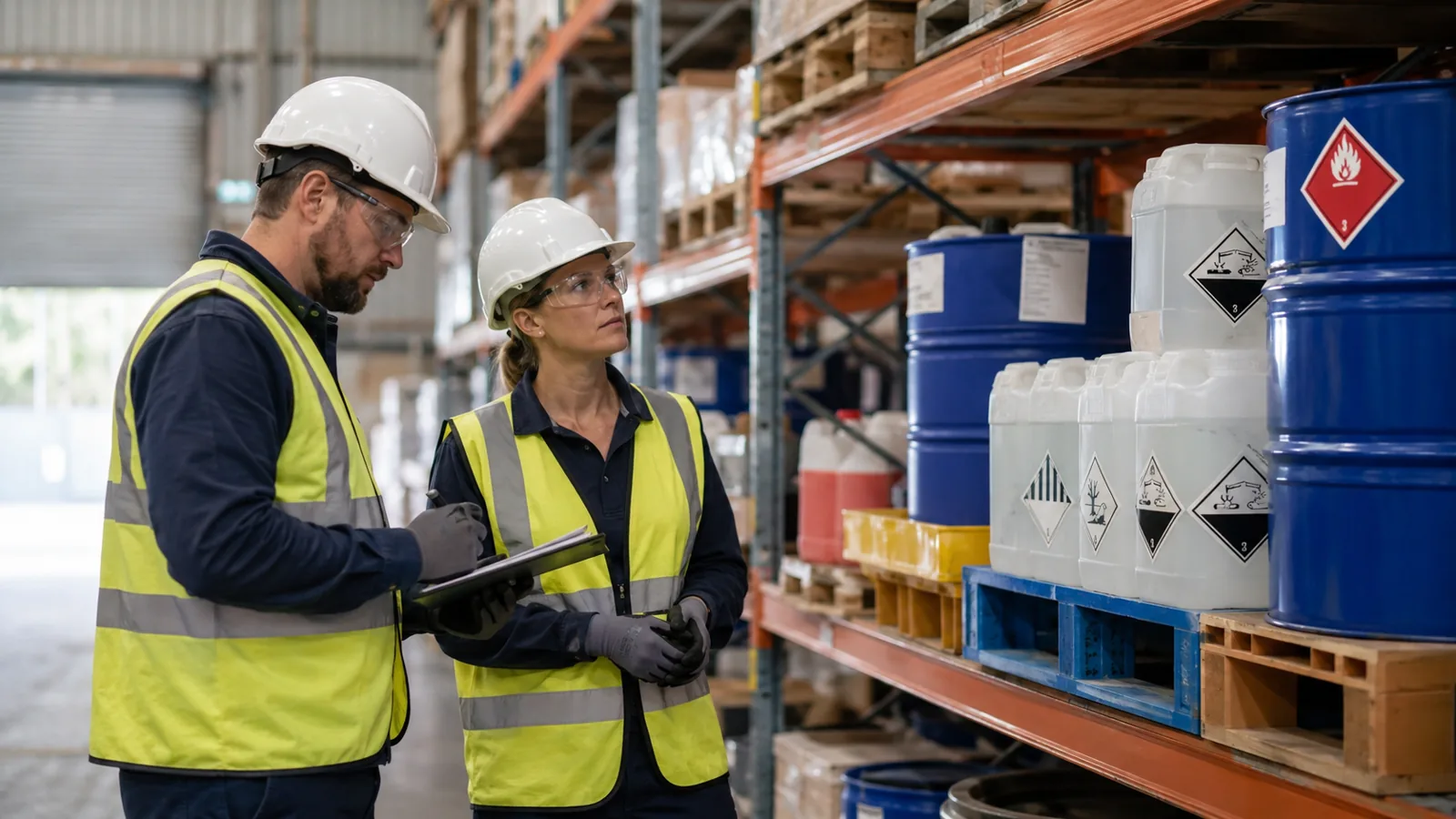
That sounds straightforward. But as Peter explains, hazard identification is harder than most people assume. Safety data sheets are a starting point, not a complete picture. The real hazard often lives in how a substance is used, received, transferred, or stored, not just in its chemical properties.
This is also why compliance tools that go beyond simple SDS storage, and actually apply regulatory logic to how a product is classified and handled in a specific operational context, are starting to change what good looks like for Australian workplaces.
The absence of an accident is not the same as the absence of risk. And the absence of a fine is not the same as being compliant.
The businesses that don't know they're regulated
One of the more confronting parts of the episode covers businesses that handle genuinely hazardous materials without realising it.
Food manufacturers. Cosmetics companies. Graffiti supply shops. Businesses importing and repackaging chemicals with no formal safety background.
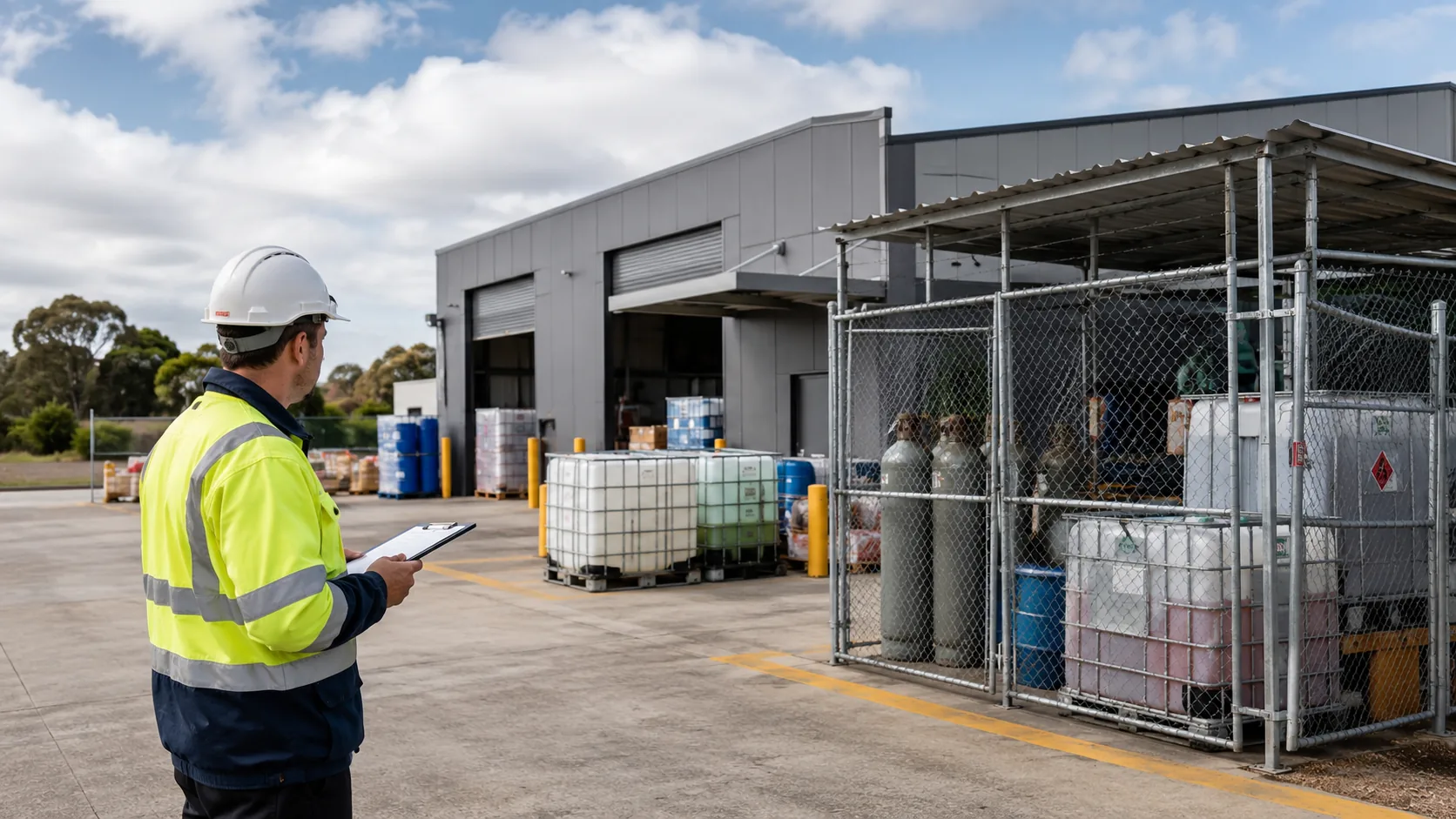
Peter is not alarmist about this. He is measured. But the examples he shares, including several recent Victorian fatalities linked to basic flammable liquid operations, make clear that operating under the radar carries real consequences.
The issue is not always ignorance in the wilful sense. Many businesses simply have no reliable way to know whether the products they store trigger obligations under WHS legislation, transport regulations, or both. Understanding whether your product register crosses relevant thresholds is not something most businesses can determine without specialist help, or the right tools.
This is the problem DGXprt was built to solve: giving businesses a clear, accurate picture of their dangerous goods obligations based on what they actually store and how they store it.
Peter also touches on a trend accelerating this risk. As Australian manufacturing has contracted, more businesses are importing pre-packaged chemicals from overseas suppliers. Safety data sheets from some of those sources are not compliant with Australian requirements and, in some cases, are not useful for identifying actual hazards.
The quality of the SDS sitting behind each product in a register matters more than most businesses realise. And it is not always obvious when an overseas document falls short of what Australian regulators expect.
On the AIDGC and why the peer review matters
Peter gives an honest account of the AIDGC's origins: a response to a regulatory shift, WorkCover NSW stepping back from its accreditation scheme and a group of consultants working to fill the gap with something that had genuine standards built in.
He is particularly direct about what the consulting membership process involves.
“I like to think we run it like hard quiz, not an easy quiz.”
Only individuals can hold consulting membership, not companies. When a business engages a firm for dangerous goods or hazardous chemicals advice, the relevant question is whether the individual consultant assigned to the work holds AIDGC consulting membership, or can demonstrate equivalent expertise through their professional record.
Peter also makes a practical point about timing. Engaging a consultant after a facility is designed, or part way through construction, limits what is possible. He describes one case where an entire concrete floor at a university had to be excavated because the ventilation in a gross anatomy laboratory had been built incorrectly. Formalin, a recognised carcinogen, had not been managed as the hazard it is. The cost of rectification ran to millions.
Get in early is the advice. It is not a sales pitch. It is a structural observation about how risk accumulates when expertise is brought in too late.
Where the industry is heading
Peter's outlook on the next five to ten years is clear-eyed rather than pessimistic.
More importation. More online purchasing. More businesses becoming consignors of dangerous goods without realising it. Safety data sheets from overseas suppliers that do not meet Australian requirements. Regulatory inspection that varies significantly in quality depending on the experience of the individual inspector.
These are not hypothetical risks. They are already occurring.
For businesses and consultants alike, the implication is the same one Peter has been making across the whole conversation: the work starts with hazard identification, and hazard identification requires attention to detail. Not just the SDS. Not just the classification. The whole picture of how a substance moves through an operation, from receipt to storage to use to disposal.
Managing that picture accurately, across a growing and changing product register, is exactly the kind of ongoing operational challenge that technology is increasingly being asked to support.
Listen to the full episode
This post covers the themes but not the depth. Peter shares specific examples, regulatory history, and practical guidance that is worth hearing in full.
Dangerous Goods Matters is the official podcast of the AIDGC. DGXprt is a proud production partner and an AI-native dangerous goods compliance platform built for Australian workplaces. New episodes are released regularly, with conversations from AIDGC members, regulators, and subject matter experts across all aspects of dangerous goods and hazardous chemicals compliance.
Understand your dangerous goods obligations clearly
If your business handles dangerous goods or hazardous chemicals and you want to understand your obligations more clearly, visit dgxprt.com.au or book a demo to see how DGXprt helps Australian workplaces stay on top of compliance.