New South Wales has the largest concentration of industrial and commercial facilities in Australia. It is also one of the most actively enforced jurisdictions for work health and safety and dangerous goods compliance. For businesses storing hazardous chemicals or dangerous goods — fuel, LPG, solvents, chemicals, gases — NSW imposes a layered set of obligations that operate regardless of industry or business size.
The NSW WHS Regulation 2025 — which replaced the 2017 Regulation — updated the requirements for hazardous chemicals and dangerous goods storage, bringing significant changes that some NSW businesses have not yet assessed against their current operations.
Disclaimer: This page provides a general overview of dangerous goods and hazardous chemicals compliance obligations in New South Wales. It is not a complete or definitive statement of the law and should not be relied upon as legal or compliance advice. Obligations vary by substance, quantity, site configuration, and the specific regulations in force at the time. Always consult the relevant legislation directly or seek qualified professional advice for your specific circumstances. Regulatory references were current at the time of writing.
The regulatory framework in NSW
Dangerous goods and hazardous chemicals compliance in NSW sits primarily within the work health and safety framework. The key instruments are:
- Work Health and Safety Act 2011 (NSW) — the primary duty of care legislation
- Work Health and Safety Regulation 2025 (NSW) — Part 7 (Hazardous Chemicals) and Schedule 11 set out specific obligations for storage and handling
- Australian Dangerous Goods (ADG) Code — the national classification framework for dangerous goods, referenced in NSW WHS legislation
SafeWork NSW is the primary regulator for WHS compliance, including dangerous goods and hazardous chemicals. Fire and Rescue NSW (FRNSW) is consulted for manifest notifications and has specific roles in emergency response planning for higher-threshold facilities.
NSW has adopted the model WHS legislation — which means the threshold structure and core obligations are broadly consistent with QLD, TAS, ACT and the Commonwealth. However, the 2025 update introduced NSW-specific changes that mean prior assessments based on the 2017 Regulation may no longer be accurate.
How dangerous goods thresholds work in NSW
Obligations in NSW are not triggered by what you store — they are triggered by how much you store. The NSW WHS Regulation uses Schedule 11 to set quantity thresholds by DG class and packing group. Exceeding a threshold activates specific mandatory obligations. Thresholds operate in three tiers. They are cumulative — crossing a higher threshold does not remove the obligations from lower tiers.
| Threshold level | Obligations triggered |
|---|---|
| Any quantity (Minor storage) |
|
| Above placard threshold | All minor storage obligations apply, plus:
|
| Above manifest threshold | All previous obligations apply, plus:
|
| Major Hazard Facility (MHF) |
|
Important: thresholds apply to aggregate site quantities
The threshold is calculated across the whole site, not per storage area. If you store flammable liquids in three separate locations, the total of all three locations is compared against the Schedule 11 threshold. Packing group also matters — Class 3 Packing Group I, II and III have different thresholds. Quantity calculations must be done correctly to determine your actual obligation level.
What changed under the NSW WHS Regulation 2025
The NSW WHS Regulation 2025, which commenced on 1 September 2025, introduced a number of updates relevant to businesses storing hazardous chemicals and dangerous goods. Key changes include:
- Updated Schedule 11 threshold quantities for certain chemical classes, reflecting changes to the ADG Code and GHS classification framework
- Revised placarding requirements under Schedule 13, including updated format and placement specifications
- Changes to notification obligations for manifest-quantity facilities, including updated timeframes for reporting to SafeWork NSW
- Alignment with updated GHS (Globally Harmonised System) classification requirements, affecting how some substances are classified and therefore which thresholds apply
- Clarification of obligations for chemicals in transit and for multi-tenancy sites
Businesses that assessed their compliance obligations under the 2017 Regulation should review their position against the 2025 Regulation, particularly if they store Class 3 flammable liquids, Class 2 gases, or substances whose GHS classification has changed.
For a detailed breakdown of the 2025 Regulation changes affecting hazardous chemicals, read NSW WHS Regulation 2025: what changed for hazardous chemicals.
NSW-specific considerations
Development consent conditions
This is a compliance dimension that is frequently overlooked — and unique to NSW's planning framework. Many industrial and commercial properties in NSW have development consents that include conditions specifying the maximum quantities of dangerous goods or hazardous chemicals that may be stored on site. These conditions are set by local councils or the NSW Department of Planning and are entirely separate from the WHS Regulation thresholds.
A development consent condition may impose a lower quantity limit than the Schedule 11 manifest threshold. Exceeding a development consent condition is a breach of planning law, not WHS law, and is enforced by the council or the Department of Planning — not SafeWork NSW. Both can apply simultaneously.
Businesses expanding their chemical storage or changing product lines should check their development consent before increasing quantities, even if the increase would remain below the Schedule 11 thresholds.
On-the-spot fines and enforcement approach
SafeWork NSW can issue penalty notices (on-the-spot fines) for specific breaches of the WHS Regulation, including failure to maintain a compliant hazardous chemicals register. These notices can be issued without a prior warning or improvement notice. Penalty amounts vary by offence category under the Work Health and Safety Regulation 2025.
The broader enforcement trend across Australian jurisdictions — and in NSW in particular — is towards faster, more direct enforcement action. The introduction of the 2025 Regulation reflects an increasing regulatory expectation that businesses manage DG compliance proactively rather than reactively.
Fire and Rescue NSW
For facilities at or above manifest threshold, Fire and Rescue NSW (FRNSW) must be notified and consulted. FRNSW has specific requirements about how manifests are presented and how emergency information is stored and accessed on site. They may conduct site visits to assess compliance with fire protection requirements and may have specific expectations about the contents of the emergency information box.
Enforcement reality in NSW
From 1 July 2024, SafeWork NSW added 88 new penalty notice offences and increased all existing penalty notice amounts by 24 per cent. Failure to maintain a compliant hazardous chemicals register is a named Schedule 18A offence — issued on the spot, no warning required.
| Offence category | Body corporate (max) | Individual / officer (max) |
|---|---|---|
| Category 1 — Reckless conduct Reckless conduct exposing a person to risk of death or serious injury | Up to ~$11.8M+ | Up to ~$2.2M or 10 years jail |
| Category 2 — Failure to comply Failure to comply with a duty that exposes a person to risk of death or serious injury. No recklessness required — most commonly prosecuted | Up to ~$2.4M | Up to ~$493K or 5 years jail |
| Category 3 — General failure to comply Failure to comply with a duty (no risk exposure required) | Up to ~$493K | Up to ~$164K |
| Penalty notice (on-the-spot) Includes failure to maintain a hazardous chemicals register (Schedule 18A, WHS Reg 2025). No warning required. | Fixed amount per notice | Fixed amount per notice |
Figures above are statutory maximums based on 2025–26 indexed penalty unit values ($123.31 per unit). Amounts index up automatically every July. Actual penalties depend on circumstances and offence category. Verify current amounts at safework.nsw.gov.au before publishing.
Category 2 is the most commonly prosecuted category — it does not require proof of recklessness. Showing that a breach exposed someone to risk of death or serious injury is sufficient. For businesses without a compliant register, manifest or notification, that threshold is not difficult to meet.
Common compliance failures in NSW businesses
Based on what SafeWork NSW inspectors, fire authorities and DG consultants regularly identify across NSW workplaces:
- No hazardous chemicals register, or a register that has not been reviewed since chemicals changed
- SDSs that are out of date, pre-GHS format, or not accessible at the point of use
- Threshold calculations done per storage area rather than aggregated across the whole site — causing manifest obligations to be missed
- Manifest not updated following inventory changes or site layout modifications
- Manifest stored digitally or in a location inaccessible to Fire and Rescue NSW outside business hours
- Development consent conditions not checked when quantities were increased
- Placarding not updated or using incorrect format for the 2025 Regulation requirements
This is a summary — not the complete obligation set
The NSW WHS Regulation 2025 imposes significantly more detailed obligations than any summary can capture. The full obligation list — with specific regulation references, plain-English explanations, and links to relevant codes of practice — is what DGXprt generates automatically for your site based on your actual inventory and threshold position. This page explains the framework. DGXprt tells you exactly what applies to you.
Continue reading
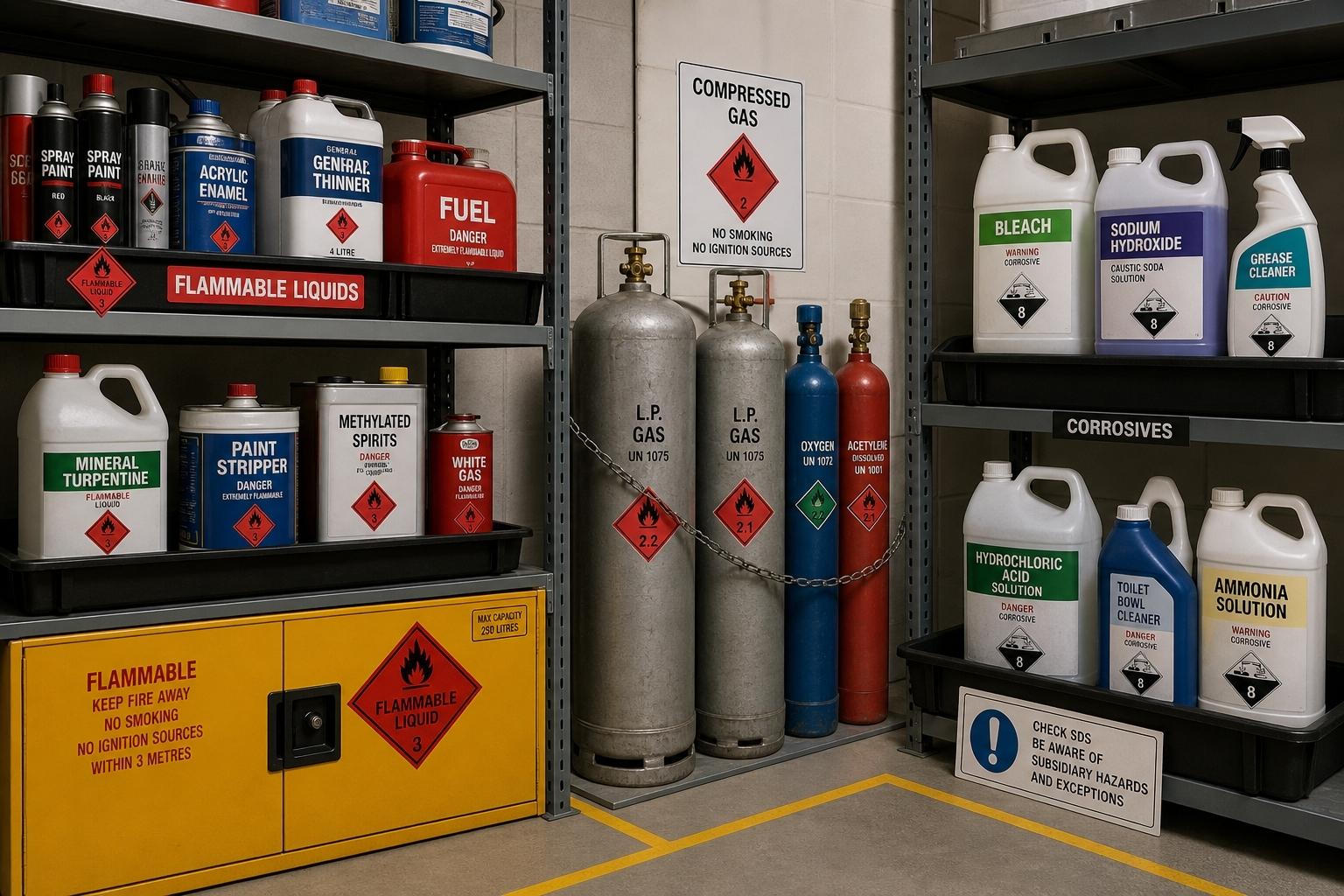
What Qualifies as Dangerous Goods in Australia?
Fuel, LPG, aerosols, paints, solvents — are they dangerous goods? Understanding what qualifies and what compliance obligations follow.
Read article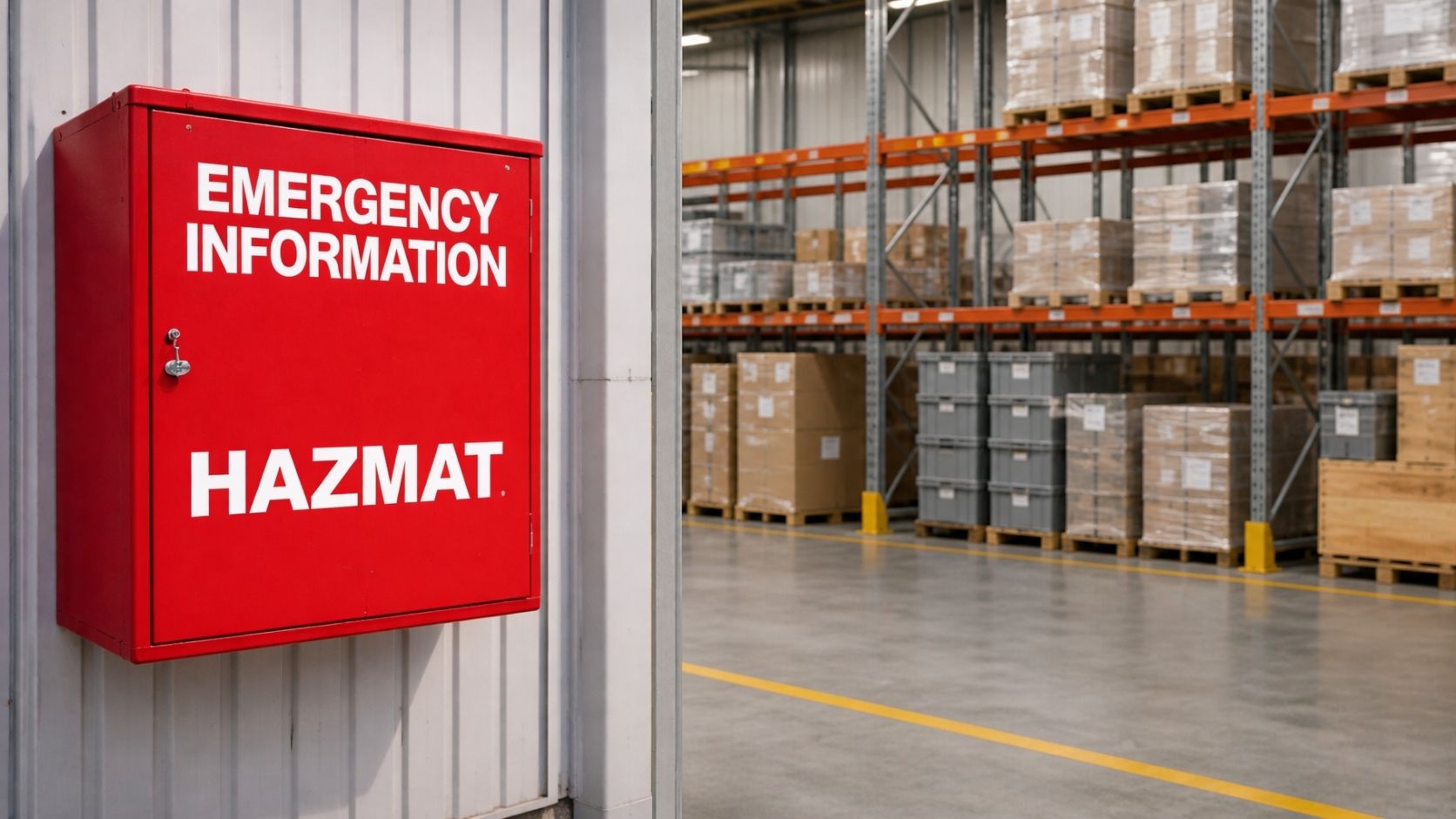
Dangerous Goods Manifest Requirements in Australia
When is a dangerous goods manifest legally required? What must it contain? A plain-English guide to thresholds and state differences.
Read articleFrequently asked questions
Common questions about dangerous goods compliance software.